


Morocco: Medinas, the Atlas, the Ocean and Telwel eSIM
08 May 2026
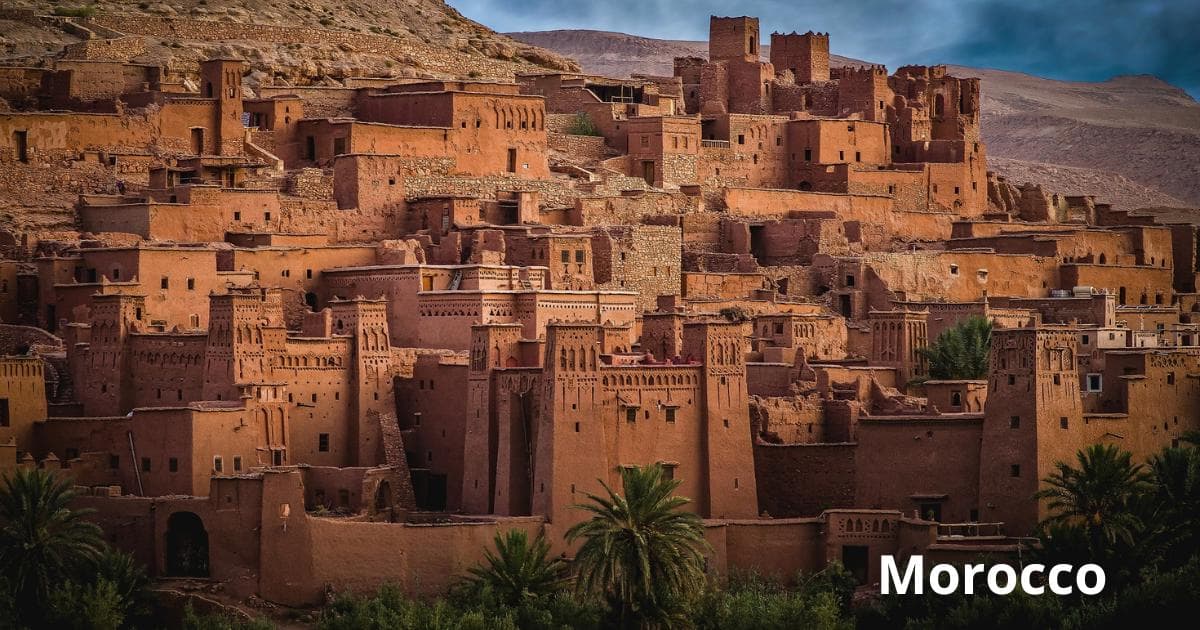
Morocco is a country where the Atlantic Ocean meets the desert, medieval medinas stand beside modern districts and mountain roads lead to Berber villages, oases and ancient fortified settlements.
It is ideal for a relaxed holiday, cultural travel, food-focused itineraries, surfing, desert journeys and long walks without a rigid schedule. To use maps, navigation, ride-hailing apps, bookings, translation tools and messengers without constantly searching for Wi‑Fi, install a Morocco travel eSIM from Telwel before you leave.
Marrakech is one of the best places to begin discovering Morocco. The red walls of the medina, Jemaa el-Fnaa square, Bahia Palace, Koutoubia Mosque, markets and gardens create an atmosphere where every turn reveals another detail.
The Marrakech medina is a maze of craft workshops, small shops, restaurants and narrow lanes. Spend hours looking for ceramics, textiles, spices, leather goods and jewelry, then retreat to a riad with an inner courtyard, a fountain and a shaded place to rest.
Mobile data is useful in Marrakech for navigating the medina, finding a particular palace or garden, ordering a ride, contacting your riad and translating product or menu descriptions.
Fez offers a deeper immersion into Morocco’s history. Its medina is considered one of the largest medieval urban areas in the world. Narrow streets, historic madrasas, leather workshops, markets and traditional architecture create the feeling of traveling through time.
In Fez, visit Bou Inania Madrasa, the Nejjarine Fountain, Al Quaraouiyine and the traditional craft districts. It is easy to lose your way inside the medina, so maps and saved addresses are particularly useful.
Chefchaouen is famous for its blue-painted streets. Located in the Rif Mountains, the town attracts visitors with its calm atmosphere, stairways, arches, doors and panoramic viewpoints. It is a place to slow down, photograph details, try local food and relax on a terrace.
Casablanca represents modern Morocco. The city combines business districts, wide avenues, an oceanfront promenade, markets and the Hassan II Mosque. Casablanca is convenient as an arrival and departure point and as a short stop between other regions.
Rabat, Morocco’s capital, offers a calmer rhythm. Explore the Kasbah of the Udayas, walk along the waterfront, see the Hassan Tower and visit the Mausoleum of Mohammed V. The city is ideal for combining history, architecture and ocean views.
The Atlas Mountains reveal another side of the country. Roads pass through mountain passes, gorges, valleys and small settlements. Stay in a guesthouse, hike through the hills, visit waterfalls and learn more about the culture of Berber villages.
Ait Benhaddou is one of Morocco’s most recognizable fortified settlements. Its earthen buildings, towers and narrow passages look like the setting of a historical film, but the striking ksar also reflects the real history of caravan routes crossing the Sahara.
Ouarzazate is often called the gateway to the desert. Routes from here pass through valleys, kasbahs, mountain roads and small oases before reaching the sand dunes. Build the journey gradually and leave time for stops in smaller towns.
Merzouga and the Erg Chebbi dunes offer the chance to spend a night in the Sahara. A camel ride at sunset, dinner at a desert camp, music around the fire and sunrise over the dunes can become the highlight of a Moroccan journey.
Mobile data is useful in the desert for contacting drivers or tour operators, checking transfer times and navigating between stops. Coverage may be unstable in remote areas, so save your camp address, contacts and route details in advance.
Morocco’s Atlantic coast offers a more relaxed pace. Essaouira is known for white buildings, blue shutters, its harbor, ramparts, seafood restaurants and constant ocean wind. It is ideal for walking, surfing, kitesurfing and a slow coastal break.
Agadir is focused on beach holidays. Its long promenade, wide beaches, cafés, restaurants and convenient resort infrastructure make it suitable for several days by the ocean. For a more atmospheric itinerary, combine Agadir with Taroudant, Paradise Valley or nearby coastal villages.
Moroccan cuisine is a major reason to visit the country. Try tagine with meat, fish, vegetables or dried fruit; couscous; pastilla; harira soup; tangia; brochettes; and fresh seafood. Tagine is traditionally slow-cooked in a special ceramic vessel, while couscous remains one of Morocco’s defining dishes.
Mint tea is more than a drink: it is part of Moroccan hospitality and everyday social life. Made with green tea, fresh mint and sugar, it is served throughout the day. Being offered tea is often an invitation to talk, relax and experience local culture.
Morocco is also well suited to a longer, slower stay. Marrakech, Casablanca, Rabat, Essaouira and other cities offer riads, hotels, cafés and work-friendly spaces. Mobile data is useful for video calls, email, maps, banking apps, bookings and remote work.
Telwel offers Morocco eSIM plans from 1 to 50 GB. All plans are valid for 30 days, making them suitable for a relaxed trip, a long itinerary and travel without changing plans during the journey. Up to 50 GB is ideal for frequent navigation, social media, video calls, remote work and multi-device use. Prices start at €3.58 per GB https://telwel.io/en/countries/morocco .
You can share mobile data for free with a laptop, tablet, second smartphone or another compatible device. There is no separate hotspot fee, and all shared data is deducted from the allowance of your purchased plan.
You can install the eSIM before traveling to Morocco. While you are outside the country, the plan does not activate, validity days are not counted and no data is deducted. The package starts only after the eSIM connects to a local mobile operator’s network in Morocco.
Buy your Morocco eSIM from Telwel, install it before departure and explore Marrakech, Fez, Chefchaouen, the Atlas Mountains, the Sahara, Essaouira and Agadir while staying connected during a relaxed month-long journey.
FAQ
What is a Morocco eSIM?
A Morocco eSIM is a digital mobile data profile installed on a compatible smartphone without a physical SIM card. Telwel offers eSIM plans for tourism, seaside holidays, medina routes, Sahara trips and remote work.
How much does a Morocco eSIM from Telwel cost?
Morocco eSIM plans start at €3.58 per GB. The final price depends on the selected data allowance.
Which Morocco eSIM plans are available?
Telwel offers plans from 1 to 50 GB, all valid for 30 days.
Is the eSIM suitable for a relaxed holiday in Morocco?
Yes. A 30-day validity period is suitable for a slow-paced trip without changing plans during the journey. You can combine Marrakech, Fez, Chefchaouen, the Sahara, the coast and the mountains.
Which plan should I choose for a month in Morocco?
For frequent map use, social media, video calls, bookings and remote work, choose a larger data allowance of up to 50 GB.
Does the eSIM work in Marrakech, Fez and Casablanca?
Telwel eSIM is designed for travel across Morocco, including Marrakech, Fez, Casablanca, Rabat, Chefchaouen, Essaouira, Agadir and other popular destinations. Check the selected plan’s conditions and device compatibility before purchasing.
Can I use the eSIM in the Sahara Desert?
Yes. Mobile data is useful for communicating with drivers or tour operators, checking transfers and navigating between stops. In remote areas and the desert, connection quality may depend on local network coverage.
Is the eSIM suitable for traveling through the Atlas Mountains and visiting Ait Benhaddou?
Yes. The eSIM helps with maps, route checks, hotel searches and communication with drivers. In mountain areas, signal may be unstable, so download important maps and addresses in advance.
Can I use mobile data on Morocco’s Atlantic coast?
Yes. The eSIM is suitable for travel to Essaouira, Agadir, Casablanca, Rabat and other coastal cities. Mobile data helps with navigation, restaurant searches, accommodation bookings, weather forecasts and communication.
Can I share mobile data with other devices for free?
Yes. You can share mobile data for free with a laptop, tablet, second smartphone or another compatible device. There is no additional hotspot fee, and all shared data is deducted from the allowance of your purchased plan.
Can I install the Morocco eSIM before traveling?
Yes. Install the eSIM in advance using the QR code over stable Wi‑Fi while you are at home or in another country. This prepares your phone before departure and lets you connect after arrival.
Does the Morocco eSIM plan start immediately after installation?
No. While you are outside Morocco, the plan does not activate, validity days are not counted and no data is deducted. The package starts only after the eSIM connects to a local mobile operator’s network in Morocco.
How do I activate a Morocco eSIM?
After arrival, turn on the eSIM line, select it for mobile data and enable data roaming specifically on the eSIM line. Disable mobile data and roaming on your primary SIM to avoid unexpected charges.
Is the eSIM suitable for remote work?
Yes. You can use it for email, video calls, messengers, maps, banking apps, cloud services and work platforms. For intensive use, choose a plan of up to 50 GB.
How can I check whether my phone supports eSIM?
Look for an “Add eSIM” option in your phone settings or dial *#06#. If an EID number appears, the device usually supports eSIM. Your phone must also be carrier-unlocked.
Do I need to remove my primary SIM card?
No. On Dual SIM-compatible devices, keep your primary SIM for calls and use the Telwel eSIM for mobile data. Disable mobile data and data roaming on your primary line to avoid unexpected charges.
Why should I buy a Morocco eSIM from Telwel?
Telwel lets you install an eSIM before your trip, choose a plan from 1 to 50 GB valid for 30 days and use mobile data during a relaxed holiday, city tours, a Sahara journey, beach time and remote work. Free hotspot sharing is available within your purchased allowance, and no days or data are deducted before arrival in Morocco.