


Switzerland: A Big Journey Through the Small Details
13 November 2026
Switzerland is easy to picture through a handful of symbols: a mountain peak, a chocolate bar, a watch, cheese and a red pocket knife. But the real journey begins when those familiar images stop being souvenirs and become part of your day.
A morning walk through an old town. An afternoon journey beside a lake, with the Alps appearing around a bend. An evening meal worth slowing down for. Between them, encounters with places and people in a country that speaks several languages.
Telwel offers Switzerland eSIM plans with 3–30 GB, valid for 14–30 days, starting at €0.90 per GB. Use mobile data for city routes, regional travel, business meetings and staying in touch.
One Country, Several Cultural Worlds
Switzerland has four national languages: German, French, Italian and Romansh. For a visitor, that is more than a guidebook fact. Shop signs, conversations, local dishes and the character of a town change as the journey continues.
There is no need to reduce the country to a single idea of “typical Swiss life.” A conversation with a small shop owner, a local food recommendation or an encounter with a craftsperson can be as memorable as another scheduled attraction.
People are not part of the scenery. Ask about a particular place, product or tradition and build your own understanding of Switzerland through the answers.
Begin with a City, but Do Not Stop There
Zurich works well for a journey combining urban life, culture and walks. Its old town and Zurich-West reveal different sides of the same city: historic and contemporary.
Bern offers another pace. Its old town, arcades, fountains and clock tower invite a walk that does not need to be measured by the number of sights completed.
In Lucerne, a city day flows naturally toward the lake. Chapel Bridge, the historic center and the surrounding landscape make it a useful starting point for exploring central Switzerland.
You do not have to choose between cities and nature. Leave room for both.
The Alps: Plan for Experiences, Not Guaranteed Weather
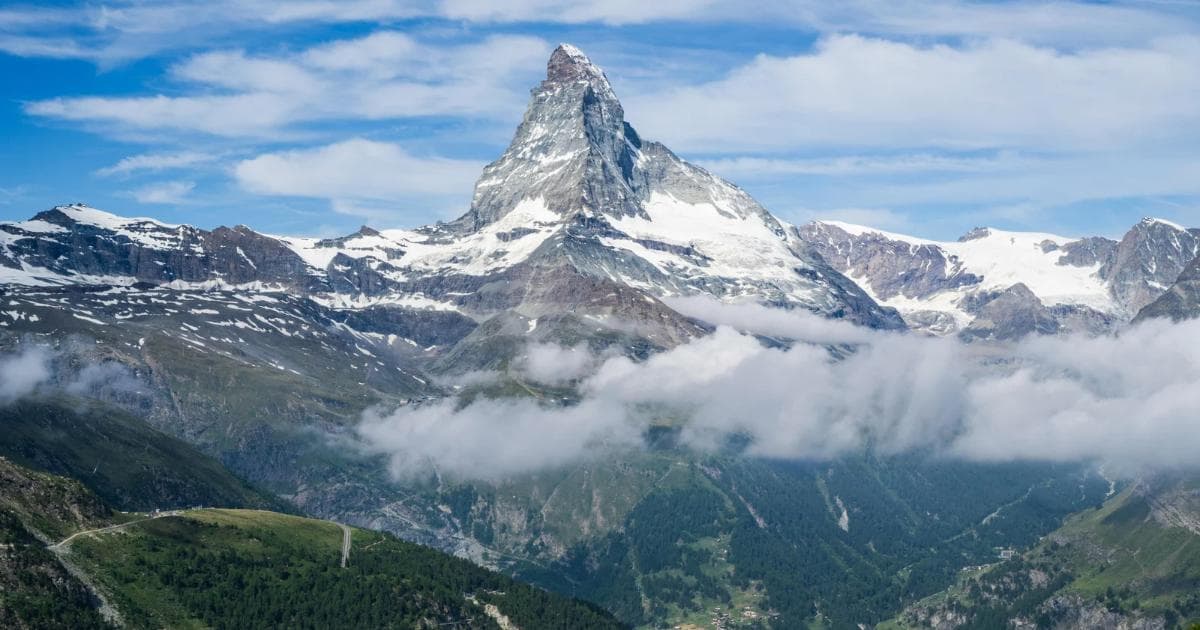
Zermatt and the Matterhorn form one of Switzerland’s most recognizable images. Yet a mountain visit offers more than a photograph of a famous summit. The journey, the views, the walks and the change of scale are part of the experience.
Keep mountain days flexible. Weather, seasonal route access and lift operations may affect your plans. Check current conditions before heading out and choose activities that match your ability.
A memorable view does not require a demanding ascent. One traveler may prefer a panoramic journey, another an accessible walk, and another a quiet day beside a lake.
Save maps, tickets and accommodation details offline. Mobile coverage in the mountains depends on your specific location.
Lake Geneva: Add Water, Light and Vineyards
Geneva, Lausanne and Montreux offer a different chapter centered on Lake Geneva. Here, it is worth spending less time rushing between addresses and more time along the waterfront.
The terraced vineyards of Lavaux add another perspective to the lake scenery. Make them a destination in their own right, leaving time for a walk and an introduction to local flavors.
This part of the journey balances a busy mountain itinerary. Not every day needs to begin with an early departure and end with another transfer.
Cheese Is More Than Something to Take Home
Start exploring Swiss cheese not by asking which variety is most famous, but by discovering how it is served.
Fondue brings melted cheese, bread and a shared pot to the table. Lunch or dinner becomes an occasion rather than a quick stop between activities.
Raclette creates a different experience: melted cheese served with potatoes and accompaniments. A similar ingredient becomes a very different meal.
Add rösti—a potato dish with a crisp exterior—and continue with regional specialties. Swiss food extends beyond cheese and chocolate, although both make an enjoyable starting point.
Chocolate: Leave Time for More Than Choosing a Gift Box
Swiss chocolate deserves a pause during the journey, not just a place on the shopping list. Compare flavors, choose smaller selections and discover what you personally enjoy.
There is manufacturing history behind the familiar symbol. Daniel Peter and Rodolphe Lindt made important contributions to the development of modern chocolate in the nineteenth century.
A visitor does not need to begin with the theory, though. Sometimes the best introduction is to try several varieties without deciding on a winner immediately.
The Swiss Army Knife: Engineering in Your Pocket
The Swiss pocket knife shows how a practical object can become a cultural symbol.
Victorinox began in 1884 with Karl Elsener’s workshop. He supplied his first soldier’s knives to the Swiss Army in 1891 and developed the Officer’s and Sports Knife in 1897, establishing the basis of the familiar Swiss Army Knife.
Look at it as more than a souvenir. It is a compact engineering question: how many useful functions can fit into a small, practical form?
If you plan to buy one, check the knife carriage rules of your airline and airport security authority. Do not assume it can travel in your cabin baggage.
Finance, Watches and Precision Technology
Behind Switzerland’s visitor landmarks is a substantial professional economy. Banking and insurance, microtechnology, high-tech industries, biotechnology and pharmaceuticals are important fields. Watchmaking adds an internationally recognized tradition of precision manufacturing.
A business visit may involve financial services, research cooperation, medical technology or engineering projects.
Prepare a specific objective for each meeting: what the project needs, its current stage and the result you want from the discussion. This makes it easier to move beyond general presentations.
Then, if the calendar allows, leave a few days free. A country first visited for negotiations may become the setting for a much more personal journey.
Mobile Data for Your Swiss Itinerary
Travel depends on small but frequent online tasks: opening a ticket, finding an address, checking a booking, sending documents or sharing a photograph.
Telwel’s Switzerland range includes:
- allowances from 3 to 30 GB;
- validity periods from 14 to 30 days;
- prices starting at €0.90 per GB.
Individual plan descriptions show the exact allowance, validity and total price https://telwel.io/en/countries/switzerland .
Install your eSIM in advance over Wi-Fi. Installation alone does not start the plan’s validity period. The countdown begins when you arrive in Switzerland and the eSIM connects to a local mobile network. Data is deducted as you use mobile internet after connecting.
Share your connection with a laptop, tablet, second smartphone or other devices free of charge. There are no additional tethering restrictions within your purchased allowance; all usage is deducted from the package.
For a quick eSIM compatibility check, open the Phone app and dial *#06#. If the screen displays an EID identifier with a long number, your smartphone supports eSIM.
Choose a Switzerland eSIM from Telwel and prepare your connection before departure, leaving more attention for everything from the smallest details to the widest Alpine views.
FAQ
What is a Switzerland eSIM?
A Switzerland eSIM is a digital mobile data profile installed on a compatible device without a physical SIM card. It is suitable for holidays, business visits and travel across several regions.
Which plans does Telwel offer?
Telwel offers Switzerland plans with 3–30 GB and validity periods of 14–30 days. Available combinations are shown in individual plan descriptions.
How much does a Switzerland eSIM cost?
Prices start at €0.90 per GB. The total price depends on the selected package. The starting unit price does not apply equally to every plan.
Is the eSIM suitable for a two-week holiday?
Yes. The range includes plans valid from 14 days. Choose an allowance based on maps, messaging, photo sharing and your other usual activities.
Which plan should I choose for a month-long visit?
Choose a plan valid for 30 days with an allowance that matches your needs. Packages of up to 30 GB are available. Account for video, file transfers and hotspot usage.
Can I install the eSIM before traveling?
Yes. Install it in advance over Wi-Fi. Installation alone does not start the plan’s validity period. The countdown begins when you arrive in Switzerland and the eSIM connects to a local mobile network. Data is deducted as you use mobile internet after connecting.
When does the plan become active?
The validity period starts when the eSIM connects to a local mobile network in Switzerland. Before that connection, no validity days are counted and no data is used.
Can I share mobile data with a laptop?
Yes. Share your connection with a laptop, tablet, second smartphone or other devices free of charge, with no additional restrictions within your purchased allowance. All usage is deducted from your package, with no separate tethering fee.
How can I check whether my smartphone supports eSIM?
The quickest and easiest way is to open the Phone app and dial *#06#. If the screen displays an EID identifier with a long number, your smartphone supports eSIM.
Do I need to remove my primary SIM card?
No, provided your device supports using your primary SIM and an eSIM together. Select the Telwel eSIM for mobile data and turn off mobile data and data roaming on your primary line to avoid additional charges.
Can I use the eSIM in different Swiss cities?
Yes, wherever a supported network is available. Connection quality depends on location, reception and network traffic.
Will mobile data work in the Alps?
Service depends on coverage at your specific location. Save maps, tickets, accommodation details and important contacts offline before mountain excursions.
What should I see on a first visit?
Combine Zurich or Bern with Lucerne and lake scenery, add Zermatt and Matterhorn views, or dedicate part of the journey to Lake Geneva and the Lavaux vineyards. Avoid trying to fit every region into a short trip.
Which languages are used in Switzerland?
Switzerland has four national languages: German, French, Italian and Romansh. The language environment varies by region.
Which Swiss food should I try?
Start with fondue, raclette, rösti and regional specialties. Add local cheeses and chocolate to the experience.
What is the difference between fondue and raclette?
Fondue is melted cheese into which pieces of bread are dipped. Raclette is melted cheese served with potatoes and accompaniments. They offer different styles of serving and dining.
What can I bring home from Switzerland?
Cheese, chocolate and a Swiss pocket knife are recognizable choices. Before buying, check food import rules at your destination and the transport requirements for knives.
Why is Switzerland interesting for business?
Its established fields include financial and insurance services, microtechnology, high-tech manufacturing, biotechnology, pharmaceuticals and watchmaking. Visits can support negotiations, research cooperation and technology partnerships.
Can I use the eSIM for work?
Yes, wherever coverage and connection quality are sufficient. Use it for email, documents, work applications and online meetings. Free hotspot sharing can connect a laptop within the purchased allowance.
Does the plan include neighboring countries?
Check the selected package’s destination list. Do not automatically assume a Switzerland eSIM includes neighboring countries or all European destinations.
Telwel offers Switzerland eSIM plans with 3–30 GB, validity periods of 14–30 days and prices starting at €0.90 per GB. Install the eSIM in advance over Wi-Fi: validity begins when it connects to a local mobile network in Switzerland, and data is deducted as you use mobile internet. Hotspot sharing with laptops, tablets and other devices is free, with no additional restrictions within the purchased allowance. To check eSIM support quickly, dial *#06#: an EID identifier with a long number indicates eSIM capability. Travel itineraries can include Zurich, Bern, Lucerne, Zermatt, Lake Geneva and the Lavaux vineyards. Switzerland is also relevant to business visitors in finance, precision technology, biotechnology and pharmaceuticals.